Most Promising Business Leader of the Year
A flagship media feature positioning Dr. Muhammad Fathy as a leading voice in banking technology, digital transformation, and executive technology leadership across the region.
20+ years architecting the digital infrastructure of Egyptian and Arab banking — delivering 99.99% uptime across 200+ systems, $10M+ in annual savings, and the first private cloud deployment in MENA financial services.
أكثر من 20 عاماً في بناء البنية التحتية الرقمية للمصارف المصرية والعربية — تحقيق توافر 99.99% عبر أكثر من 200 نظام، وتوفير أكثر من 10 ملايين دولار سنوياً، وإطلاق أول سحابة خاصة في القطاع المصرفي بمنطقة الشرق الأوسط وشمال أفريقيا.
"Dr. Fathy brings something rare — 20 years of real execution, not consulting slides. His clarity on what actually breaks in banking transformation is invaluable at board level."
— Senior Banking Executive, Egyptian Financial Sector
Dr. Muhammad Fathy leads a Technology Services & IT Operations Sector overseeing 200+ systems, 2,000+ servers, and a 150-engineer organization spanning cloud, cybersecurity, network, and operations.
Two decades of execution defined by evidence, not claims: 99.99% availability sustained across critical banking infrastructure; service desk resolution rates lifted from 85% to 99%; $10M+ in annual cost optimization; 100+ projects delivered spanning IVR, direct sales, digital branch, and internet banking platforms serving 20 million customers.
Parallel track: published author with 25K+ readers across fintech, cybersecurity, leadership, and literary fiction. LinkedIn influencer with 75K followers. Confirmed LEAP speaker. Cover feature, Entrepreneur Insights Magazine 2025.
Sustained 99.99% uptime across 200+ systems and 2,000+ servers — spanning core banking, digital channels, and payment infrastructure serving 20 million customers.
Delivered over $10M in annual savings through infrastructure rationalization, vendor consolidation across 100+ contracts, and operational efficiency programs across the IT sector.
Lifted service desk and IT security ticket resolution from 85% to 99% — restructuring processes, escalation paths, and team capability across a 150-engineer organization.
Cybersecurity incident detection and initial response achieved under 15 minutes — enabled through security operations platform deployment, Zero Trust Architecture, and 24/7 security operations discipline.
Built organizational capability from a 25-person team to 150+ engineers — training and certifying 500+ professionals and internalizing capabilities previously dependent on vendors.
100+ technology projects executed including core banking modernization, digital channels platform, IVR, direct sales platforms, digital branch infrastructure, and PCI-DSS 4.0.1 certification.
"Most banking transformations fail not from lack of technology — but from lack of doctrine."
After 20 years executing transformation inside regulated banking institutions, a clear pattern emerged: sustainable change requires a disciplined sequence — not parallel execution of every priority at once. The Fathy Model is a five-pillar doctrine for technology transformation in financial institutions, developed through direct execution across 20+ years in Egyptian and Arab banking institutions.
It answers the question that most transformation programmes avoid: in what order do you build, and why?
The standard playbook says: deploy an identity provider, install a PAM solution, run a vendor proof-of-concept, declare Zero Trust. Most regional banks have done exactly this. Most have also experienced a significant breach or control failure within eighteen months of that declaration.
The failure is not technical. The technology works. The failure is sequencing. Zero Trust is being deployed as a product purchase rather than an operating doctrine. Banks buy the tools before they have answered the foundational question: who is allowed to access what, from where, under what conditions, and who is accountable when that changes?
Until that question is answered in writing, enforced in policy, and owned by a named individual — not a vendor — every PAM console and micro-segmentation rule is theatre. It passes the audit. It does not stop the attacker.
At Banque Du Caire, we sequenced it differently. Identity and access governance came first — not as a tool deployment but as a governance restructuring. Six months of that work before a single ZTA product was procured. The result: PCI-DSS 4.0.1 certification, mean detection time under 15 minutes, and zero critical incidents in the subsequent operating period. The sequence is the strategy.
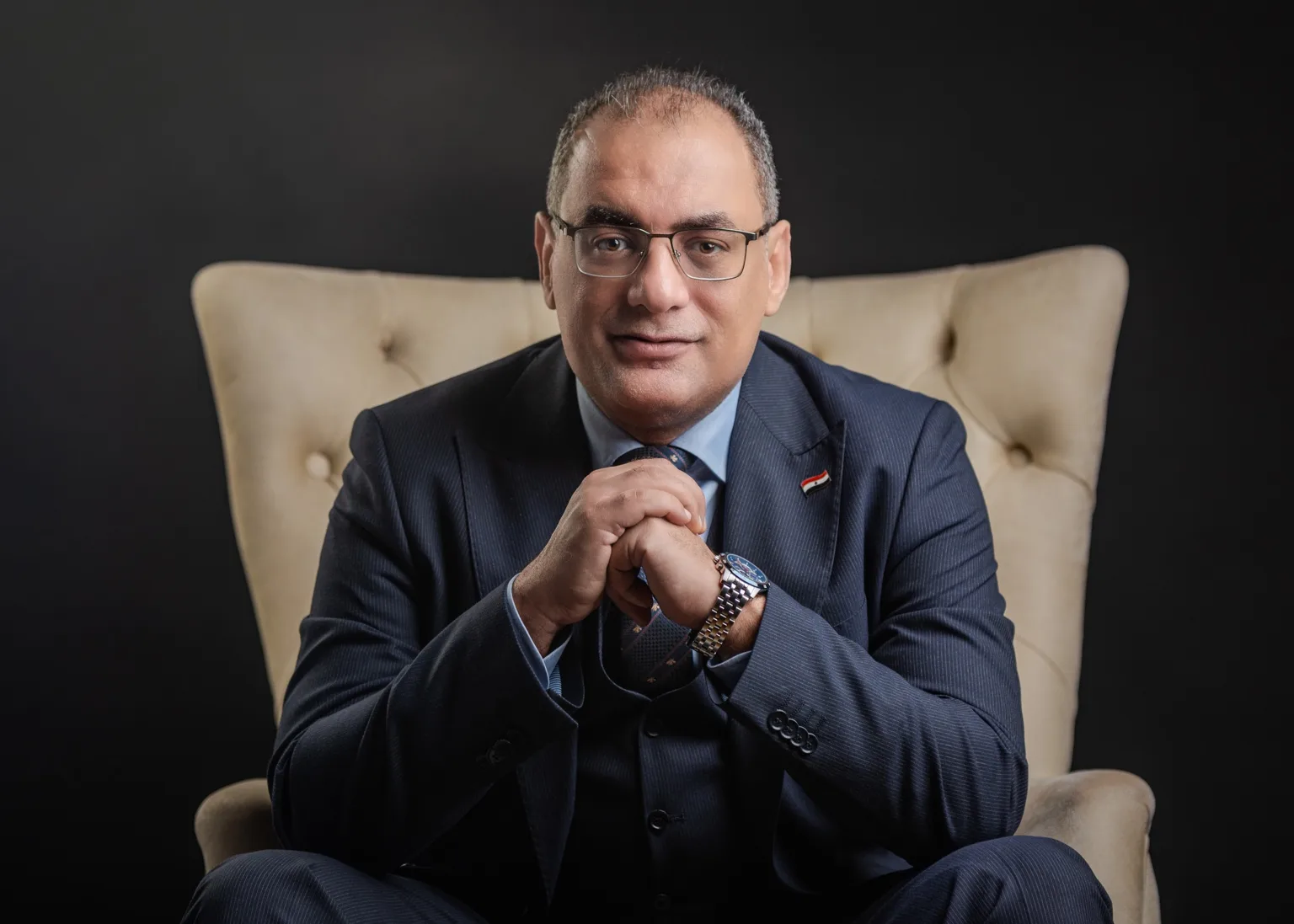
A flagship media feature positioning Dr. Muhammad Fathy as a leading voice in banking technology, digital transformation, and executive technology leadership across the region.
A management-focused article on why the real cost of losing people does not fully appear in the budget line, but in continuity, knowledge, and execution quality.
A strategic commentary connecting regional conflict, macro risk, and global market consequences in a way that broadens the site beyond pure technology positioning.
A critical leadership lens on the gap between artificial intelligence ambition and real organizational readiness for transformation.
An executive-style article unpacking the hidden gap between monthly salary optics and true annual compensation value.
Thought leadership on restoring direction, motivation, and engagement after the tension of performance appraisal cycles.
A concise argument for balancing safety controls with execution speed, innovation, and institutional growth.
Featured speaker positioning around trusted AI, transformation of people and operations, and executive credibility in emerging technology.
A speaking credential that strengthens the site’s authority across operations, infrastructure, and digital banking transformation.
A visual proof point for public presence, industry dialogue, and executive voice beyond the written article format.
Most digital transformation programmes in banking fail at layer zero — not the technology layer, but the conversation layer. The first question is never "which platform?" It is "what problem are we solving, and who owns the answer?" I have seen organisations spend two years selecting tools for a transformation they never defined. Tools are the last decision, not the first.
The 60/30/10 budget discipline — 60% run, 30% change, 10% transform — is being misquoted across the industry. People treat it as a target. It is actually a ceiling. If your run costs are at 60%, you have a cost problem. The goal is to move run below 50% so that change and transform can absorb real investment. Benchmarking against 60/30/10 while your run cost is 78% is measuring the wrong number.
When I built the team at Banque Du Caire from 25 to 150+ engineers, the hardest part was not hiring. It was creating the conditions in which capable people could do their best work without asking permission at every decision layer. Talent without autonomy is expensive overhead. The operating model had to change before the headcount did.
"Most digital transformations fail not from lack of technology — but from lack of doctrine."
Keynote sessions draw directly from 20 years of execution inside regulated Arab banking institutions. Every session is built around specific outcomes, not frameworks in the abstract.
Topics are tailored to your audience. Sessions available in Arabic and English. Technical requirements and high-resolution photography provided on confirmation.
Weekly long-form content on banking technology leadership, cybersecurity strategy, and digital transformation execution. Read by CIOs, CTOs, and bank executives across the Arab world.
"The difference between a bank that survives a cyber incident and one that doesn't is not the firewall. It's whether someone in the room at 2am has the authority to shut down a production system without calling four approvers first. Governance is the security control most CISOs forget to buy."
"Every capability you cannot execute without a vendor is not a capability. It is a dependency. And dependencies have a way of becoming visible at the worst possible moment. We spent three years systematically eliminating ours. The $10M annual saving was the metric we reported. The real result was optionality — the ability to make decisions without being held hostage to a contract."
"Most technology budgets are structured to hide how little is actually being spent on transformation. When you separate Run from Change from Transform and force each category to defend its own number, something uncomfortable becomes visible: in most banks, over 80% goes to keeping the lights on. That is not a technology problem. That is a strategy problem disguised as a budget."
Available for board advisory, keynote speaking, digital transformation consulting, and cyber resilience strategy across the Arab region and internationally.